Race Bib or Reusable Belt: Two Ways to Carry a Number
Race bib or reusable belt? Compare setup, fit and shirt contact to choose a number-carrying option that suits your kit and keeps fabric unpinned.
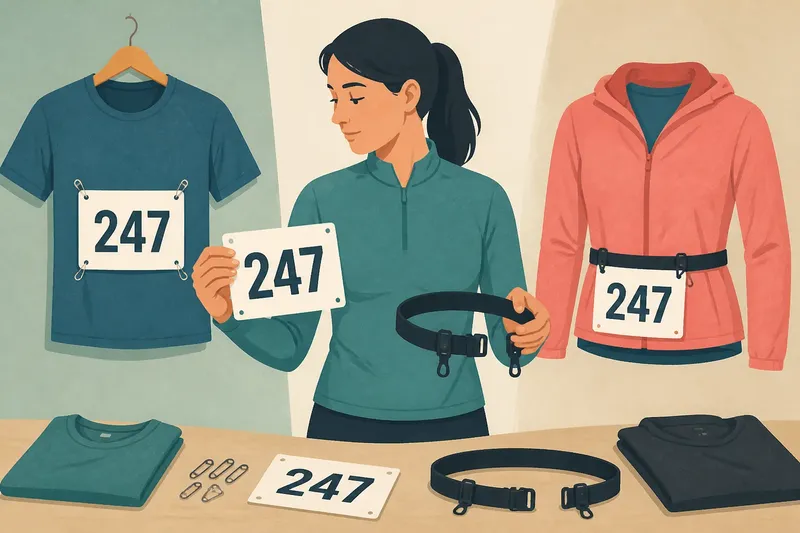
Race bib or reusable belt? If you are standing in a crowded start area with a paper number in one hand and a shirt you would rather not pierce in the other, the choice is practical: pin the bib to your top, or attach it to a belt that sits around your waist. Each keeps your number visible, but they differ in setup, adjustment and how much contact they make with your clothing.
A pinned bib suits runners who want a simple, fixed attachment and do not mind holes in a race shirt. A reusable number belt suits runners who want to keep fabric unmarked, adjust the number’s position or move it between layers. The better fit depends less on fashion than on what you will wear, how you like things to sit and what the event permits.
Choose for your kit
Think first about the garment that will carry the number. If it is an ordinary technical top that you are happy to pin, the supplied bib and safety pins are often the least fiddly option. The number stays attached to that shirt, so you can put the top on without separately fastening a belt.
That fixed arrangement can be useful if you have already chosen your race outfit and do not expect to change layers. You can position the bib on the front of the shirt, smooth the fabric and attach the corners. Once it is secure, it moves with the top rather than shifting around your waist.
A reusable belt is a better match if you want to avoid puncturing a favourite singlet, a lightweight shell or a garment you intend to wear again without visible pinholes. The belt holds the number independently, so the shirt remains unpierced. It can also make sense if you expect to add or remove a layer and want the number to stay with your running kit rather than one particular top.
Imagine you plan to start in a thin singlet but may pull on a light jacket before the race begins. If you pin the number to the singlet, covering it with the jacket could hide it; if you pin it to the jacket, taking that layer off moves the number with it. A belt worn over the outermost layer you plan to keep on offers a separate attachment point, while a pinned bib works neatly if you settle on one visible top.
Check the event’s number-display instructions and the belt maker’s fit and attachment guidance before deciding; event rules and product designs vary.
Compare the setup
Pins are familiar and usually need no adjustment beyond choosing where the bib sits. Lay the shirt flat, place the number at the front, and fasten the supplied pins through the bib and fabric near its corners. Take care not to catch the shirt’s opposite side or stretch the material as you work.
The main trade-off is that each pin passes through the garment. That leaves small holes, and a pin can snag fabric if it is handled carelessly. A soft, easily marked shirt may therefore be a poor candidate, even if pinning itself feels quick.
A belt adds a separate fitting step. You put it around your waist, adjust the strap, then attach the bib to the belt using its clips, toggles or other fittings. The exact arrangement depends on the model, so follow its instructions rather than assuming every belt fastens the same way.
That extra step buys flexibility: you can alter the belt’s position or move the number without repinning a shirt. It also means there is another piece of kit to keep track of, and the number may need a small adjustment after you change the strap. If you prefer a single fixed setup, pins are simpler; if you value repositioning, the belt’s extra fitting can be worthwhile.
For a calm start-area routine, decide on the attachment before you are surrounded by other runners. Set out the shirt, number, pins or belt at home, then check that the number faces forward and remains easy to see when you move naturally.
Think about adjustment
A pinned bib is fixed relative to the shirt. It will not slide around your waist, but it cannot be shifted independently once pinned. If you change your mind about the height or angle, you need to remove and reposition the pins, which may leave more holes.
This is a good fit for runners who like a stable, uncomplicated arrangement and can place the number comfortably before dressing. It is less convenient if you want to move the number between garments or fine-tune its position after putting on a layer.
A belt gives you more ways to adjust the position around your waist. You can raise, lower or centre it, depending on the strap and attachment design. That can help if the number feels awkward over a seam or if you want to avoid placing it across a particular part of your shirt.
More movement is not automatically better. A loosely fitted belt may shift or bounce, while one pulled too tight may feel restrictive. Adjust it so it sits securely without digging in, and check the position with the clothes you will actually wear rather than over a different outfit.
Say you have a soft shirt with a raised seam across the front and find that a pinned bib would sit unevenly. A belt with a broad adjustment range could let you place the number slightly above or below that seam; the visible result to look for is a number that lies flat and stays facing forwards as you walk and jog in place. If the belt cannot sit comfortably there, pins on a different garment may be the better choice.
Keep fabric untouched
The clearest difference is what touches the shirt. Pins pierce it; a belt does not need to. If avoiding holes is your priority, the belt is the straightforward choice, provided it can sit comfortably over the clothes you intend to wear.
That can matter with delicate fabric, a prized club top or a garment you borrow and need to return in good condition. It may also be appealing if you often wear the same kit after an event and do not want to inspect it for pinholes or snags.
A belt still rests against clothing, so it is not entirely contact-free. The strap can rub against the fabric, and its clips or fittings may touch the shirt. Consider the material and shape of the belt, and check that nothing catches when you move. A smooth, broad strap may feel different from a narrow one with prominent hardware.
Pins have their own small clothing considerations. Place them through sturdy areas near the bib’s corners rather than forcing them through a delicate seam or a fragile panel. If the shirt’s care label or the pin instructions call for a particular approach, follow that guidance.
Which option fits you?
Is a belt better for a delicate shirt?
Usually, if your main concern is avoiding holes, a reusable belt is the more suitable option because it holds the bib without pinning through the shirt. Check that its strap and fittings do not rub or catch the fabric.
Will a pinned bib move around?
Once pinned securely, it stays attached to the shirt rather than moving independently around your waist. The shirt itself can shift as you run, so a comfortable fit and a flat bib placement still matter.
Can I adjust a number belt after fitting it?
Most belts are designed to be adjusted, but the method and range depend on the model. Make small changes while wearing your race layers, then check that the belt feels secure and the number remains forward-facing.
Which is easier if I may change layers?
A belt can be easier if you want the number to remain separate from a particular top, since you can wear it over the layer you keep on. A pinned bib is simpler when you know which garment will stay visible throughout.
Make the call
Choose pins if you want a familiar, fixed setup, have a shirt you are comfortable piercing and do not expect to change the number’s position. Choose a reusable belt if preserving the shirt matters, you want to shift the number independently or your layers may change.
If neither option feels obvious, decide by trying the arrangement with your actual race clothes. Pinning is a sound choice when the fabric can take it and the number sits where you want; a belt is a sound choice when it fits securely and keeps the garment untouched. For a race bib or reusable belt, the useful test is simple: wear the kit, look for a flat and visible number, and notice whether the attachment distracts you as you move.
Keep the spare pins or belt fittings with your race kit, not loose in a pocket, and make the final adjustment before you join the start queue. A number that is easy to see and comfortable to carry lets you focus on the run rather than fiddling with your shirt.